Hearing scratching above the ceiling? Learn how to get rid of rats in the roof for good with proven removal, sealing, and prevention steps.
Scratching, scurrying, and the odd thump above the ceiling at night usually mean one thing: rats have moved into your roof void.
Roof rats are agile climbers that love the warm, dark, undisturbed space above your ceiling. Left alone, they breed fast, chew wiring, and create a genuine health and fire risk.
This guide gives you the correct order of attack: confirm the problem, block the entry points, remove the rats, and stop them from coming back. Skip a step, and they return within weeks.
Table of Contents
- Signs you have rats in the roof
- Why roof rats are worth taking seriously
- Step 1: Find and seal entry points
- Step 2: Remove the rats
- Step 3: Stop them returning
- Cleaning up after the rats are gone
- Common mistakes that let rats win
- When to call a professional
- Common questions
Signs you have rats in the roof
Rats are most active at night, so the first clue is usually sound. Listen for scratching, gnawing, and quick scampering across the ceiling after dark.
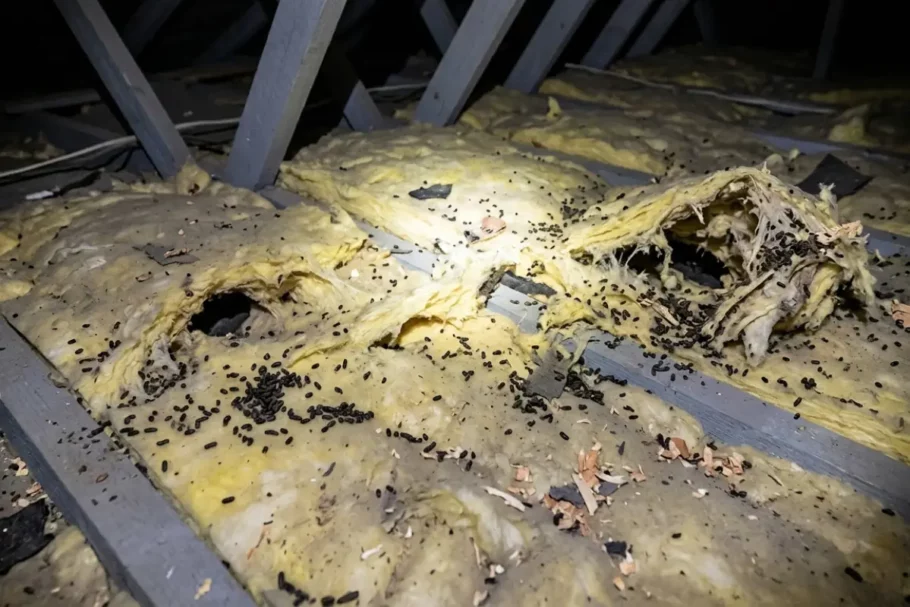
Other signs include dark, spindle-shaped droppings in the roof void or along wall tops, greasy rub marks along beams, gnawed cabling, and a faint musky smell.
The roof rat is one of the three main rodent pests in Australian homes, alongside the Norway rat and the house mouse. The roof rat is the one most likely to be living above your ceiling because it is a confident climber.
Why roof rats are worth taking seriously
Rats are not just a nuisance. NSW Health notes that rodents can spread infections through their urine, faeces, and saliva, including through contamination of food preparation surfaces, which is why prompt control paired with strong hygiene and exclusion matters.
There is a fire risk too. Rats gnaw constantly to keep their teeth short, and electrical cabling in the roof is a frequent target, which can expose live wires.
That combination of health risk and property damage is why a wait-and-see approach rarely works with roof rats.
Step 1: Find and seal entry points
This step comes first for a reason. If you bait and trap without sealing, new rats simply replace the ones you remove.
Rats can squeeze through a gap the size of a 20-cent coin. Inspect the roofline, eaves, gaps around pipes and cables, broken roof tiles, and the spaces where the roof meets the walls.
Work methodically around the outside of the house first, then the roof void from inside. Daylight showing through the roof cavity often reveals a gap you would otherwise miss, so inspect with the lights off where it is safe to do so.
Common entry points people overlook include weep holes in brickwork, gaps behind fascia boards, the join where a garage roof meets the house, and the openings around evaporative cooler ducts and exhaust vents.
Seal gaps with steel wool packed into cavities, metal flashing, or hardware cloth. Rats chew through expanding foam and plastic, so use materials they cannot gnaw through. For larger holes, back the steel wool with metal mesh so it cannot be pulled out.
Leave one or two suspected active entry points open at first. Sealing every gap before you remove the rats can trap them inside, where they die in the cavity and create a lingering smell.
Step 2: Remove the rats
With entry points closed, you can deal with the rats already inside.
Snap traps
Snap traps are effective and let you confirm a catch. Place them along walls and beams where rats travel, baited with peanut butter or dried fruit. Note that glue traps are prohibited for trapping animals in Victoria, so check your state’s rules.
Set more traps than you think you need. Rats are wary of new objects, so leaving traps unset and baited for a couple of nights before arming them lifts the catch rate noticeably.
Baiting
Rodenticide baits work but carry real risks. A rat can die inside the roof void and create a strong smell, and baits are dangerous to pets, children, and wildlife that may eat a poisoned rat. Use enclosed bait stations and follow the label exactly.
Where you do use bait, first-generation or single-feed products that break down faster reduce the risk to owls, cats, and dogs that may eat a poisoned rat. Read the active ingredient on the label rather than relying on the brand name.
Whichever method you choose, do not mix heavy baiting and trapping in the same void at the same time. Pick a primary method so you can tell what is working and avoid poisoned rats dying in spots you cannot reach.
Step 3: Stop them returning
Removal only lasts if you remove the reasons rats came in the first place.
Cut back tree branches and foliage that touch the roof, since these are the highways roof rats use. Clear clutter and stored food from the roof and garage, fix plumbing leaks that give them water, and keep bins sealed.
A short inspection of the roofline every few months catches new gaps before rats find them.
Pay attention to the garden too. Compost bins, fallen fruit, pet food left out overnight, and unsecured chicken feed are reliable rat magnets that keep a population alive right next to your house.
| Step | Goal | Key action |
| Seal | Block access | Steel wool and metal flashing on all gaps |
| Remove | Clear current rats | Snap traps or enclosed bait stations |
| Prevent | Stop reinfestation | Trim foliage, remove food and water |
Cleaning up after the rats are gone
Removal is not the final step. Rats leave behind droppings, urine, and nesting material that carry health risks and attract new rodents through scent.
Ventilate the roof void before you enter, wear a fitted mask and disposable gloves, and dampen droppings before removal rather than sweeping or vacuuming dry, which can send particles into the air.
Bag and dispose of soiled insulation and nesting material, then wipe hard surfaces with a disinfectant. Replacing badly contaminated insulation also removes the scent trail that draws the next rat to the same spot.
Common mistakes that let rats win
A few repeated errors are why infestations come back after what felt like a successful clear-out.
Skipping the sealing step is the biggest one. Trapping without closing entry points simply removes individuals while the colony keeps refilling the void.
Relying on ultrasonic repellers is another. There is little evidence that these devices clear an established infestation, and they give a false sense that the problem is handled.
Setting too few traps, giving up after a few quiet nights, and leaving food sources like pet bowls and fruit trees untouched all let a knocked-back population recover.
When to call a professional
A small, early problem is often solvable yourself. A large or repeated infestation usually is not.
If you cannot locate the entry points, the noise continues after sealing and trapping, or you are uneasy working in the roof void, professional help saves time and damage. A specialist like Rodent Pest Control Brisbane.com can locate hidden access points, manage baiting safely around pets and children, and set up a prevention plan, which is worth the cost when an infestation has taken hold.
Conclusion
Getting rid of rats in the roof works best as a sequence: confirm the signs, seal every entry point, remove the rats already inside, then remove the food, water, and access that drew them in. Follow that order, and a noisy roof becomes a quiet one for good.
For more on protecting your home, read our related guide on seasonal pest-proofing tips for your home.
Common questions
How do I know if it is rats or possums?
Possums are heavier and louder, usually producing slow thumps rather than the fast scratching of rats. Possums are also protected, so they require different handling.
Will rats leave on their own?
Rarely. A warm, sheltered roof with nearby food is an ideal habitat, so they stay and breed unless you remove them and seal the entry points.
How long does it take to clear a roof of rats?
A minor infestation can clear in one to two weeks with sealing and trapping. Larger infestations take longer and often need professional follow-up.
Why can I still hear noises after I sealed everything?
Either rats were trapped inside when you sealed, or you missed an entry point. Re-inspect for gaps, set traps in the void, and listen for whether the activity is fading or holding steady over a week.
Do peppermint oil and other home remedies work?
Scent deterrents may briefly discourage rats, but rarely move an established nest. They are no substitute for sealing entry points and trapping the rats already inside.
Will the rats damage my home insulation?
Yes. Rats flatten and foul insulation as they nest in it, which reduces its thermal value and leaves a scent that attracts more rats. Heavily soiled insulation is usually worth replacing after removal.