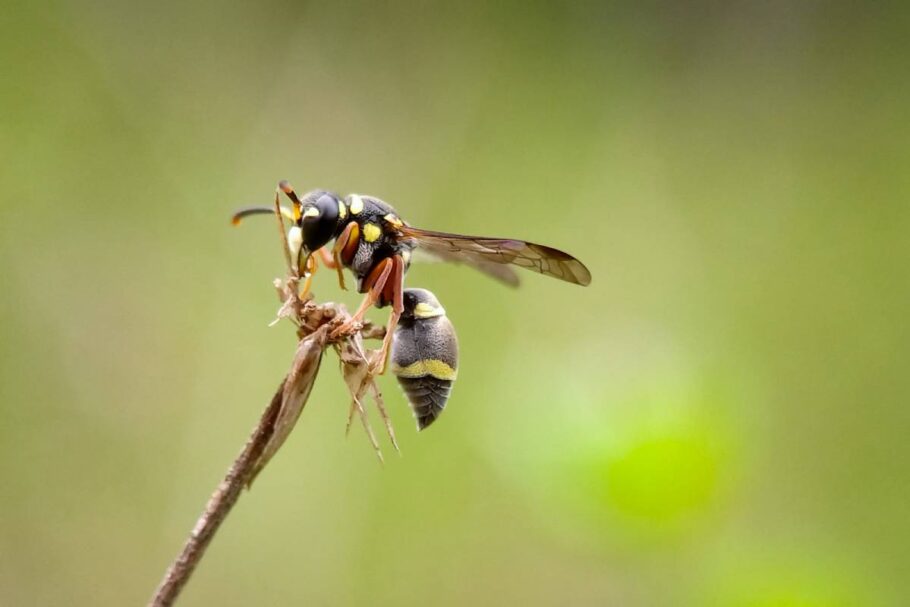
Identify the 5 most common wasps in Australia. Learn to spot their nests, understand their sting risk, and find out which species help your garden.
Finding a buzzing visitor in your backyard can be unsettling. Is it a harmless pollinator or an aggressive pest? In Australia, where biodiversity is high, knowing the difference isn’t just a matter of curiosity; it’s a matter of safety.
While most native wasps are shy and beneficial for your garden, certain introduced species are notoriously territorial. One wrong move near a hidden nest can lead to multiple painful stings, posing a significant risk to children, pets, and those with allergies.
This guide provides a definitive identification blueprint for the 5 most common wasps in Australia, helping you decide when to let them be and when to call in the pros.
TL;DR: Australian Wasp Identification
| Species | Appearance | Nest Type | Threat Level |
| European Wasp | Bright yellow/black, black antennae | Underground / Cavities | High |
| Common Paper Wasp | Slender, reddish-brown/tan | Hanging “Umbrella” | Moderate |
| Mud Dauber Wasp | Thread-waisted, black/orange | Mud tubes on walls | Low |
| Sand Wasp | Pale green/yellow bands | Burrows in sand | Low |
| Blue Flower Wasp | Large, black with blue/black wings | Solitary (no nest) | Low |
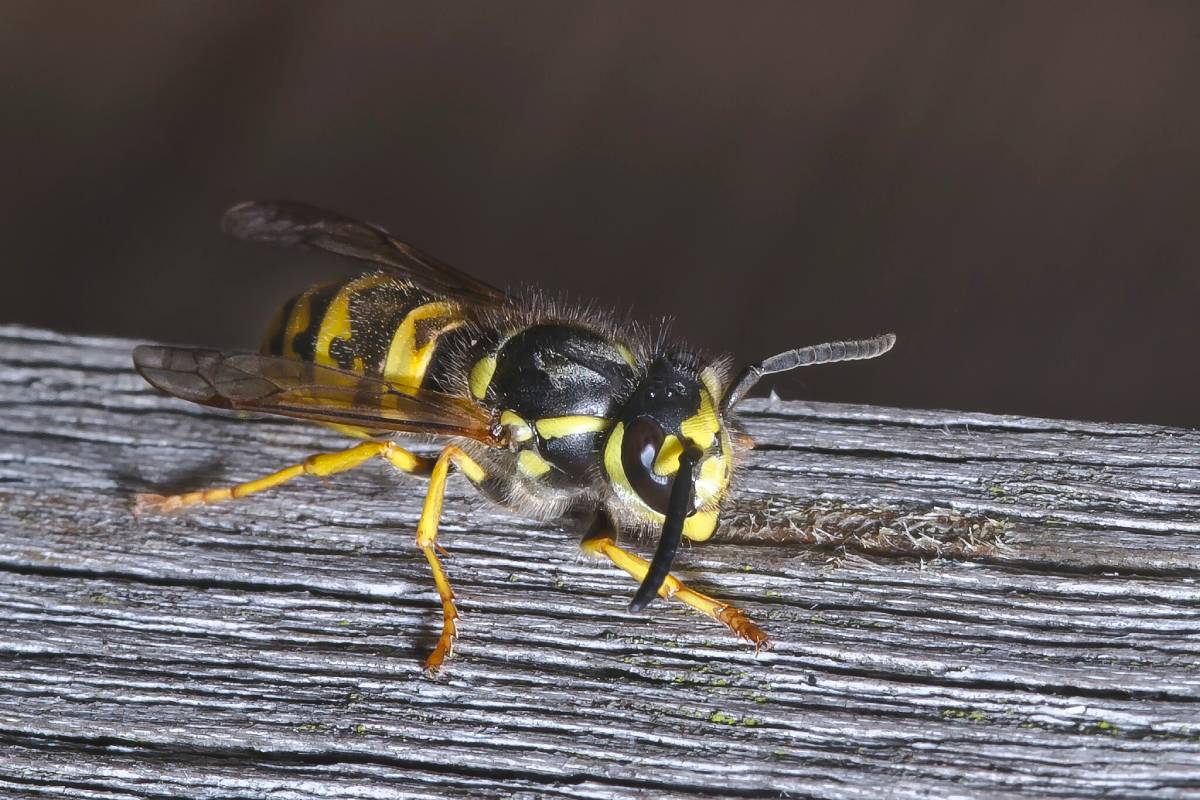
Photo by pjt56, CC BY-SA 3.0, via Wikimedia Commons
1. The European Wasp (Vespula germanica)
The “uninvited guest” of Australian picnics, the European wasp is an introduced species and arguably the most dangerous on this list.
How to Identify: They are roughly the size of a honeybee but with a bright yellow and black banded abdomen. A key identifier is their solid black antennae and the fact that they fly with their legs tucked close to their body.
Nesting Habits: Unlike most wasps, 90% of European wasp nests are hidden underground or inside wall cavities. Look for a steady stream of wasps entering and exiting a single hole in the floor or a crack in the brickwork.
Preventing these invaders starts with structural maintenance; while you prepare your home exterior for seasonal painting or repairs, ensure you seal any gaps or cracks that could serve as an inviting gateway for a colony.
Safety Advice:
High Risk. They are scavengers and highly aggressive. If you find a nest, do not attempt to DIY. Their colonies can house thousands of individuals ready to defend their home en-masse. For residents dealing with these aggressive invaders, consulting experts like SWAT Pest Control Brisbane.com.au is the safest way to ensure a nest is neutralised without risk to your family.
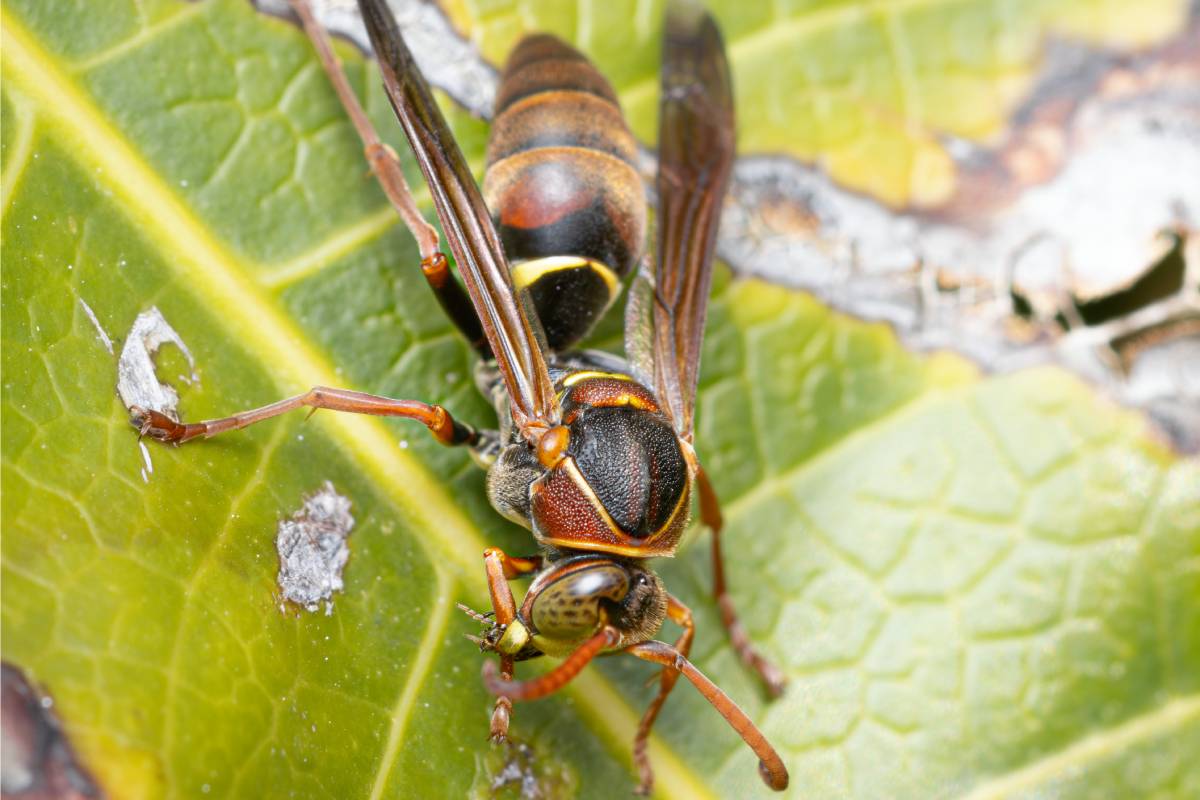
Photo by P.D. Amara, CC0, via Wikimedia Commons
2. Common Paper Wasp (Polistes spp.)
If you see a nest hanging from your eaves that looks like an inverted grey umbrella, you’re looking at Paper Wasps.
How to Identify: These wasps are more slender than the European variety. They have a distinct “waist” and orange-brown antennae. When they fly, their long back legs dangle visibly below them.
Nesting Habits: They build small, open-faced nests made of chewed wood fibre (paper). You’ll often find them under fence cappings, roof tiles, or in dense shrubs.
Safety Advice:
Moderate Risk. They are generally peaceful but will sting if you get too close to the nest (e.g., while pruning or cleaning gutters). Their sting is famously painful, often described as a “burning” sensation.
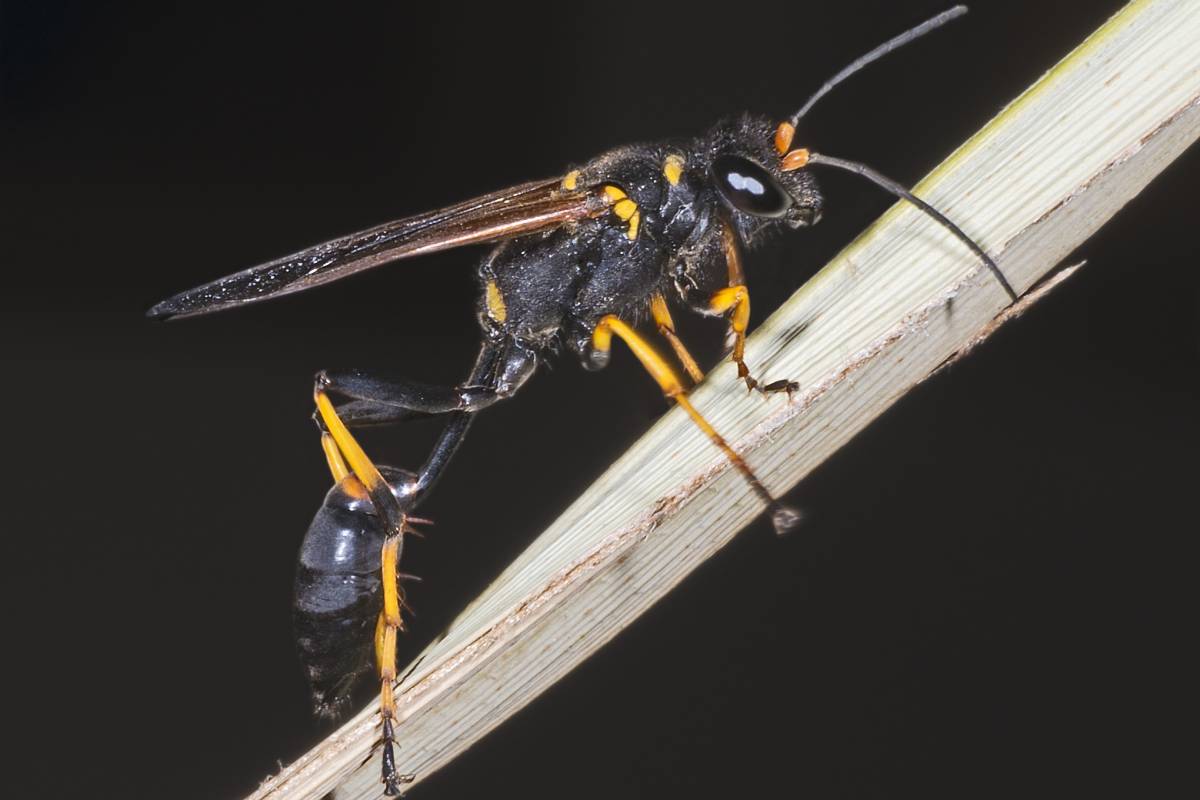
Photo by Muséum de Toulouse, CC BY-SA 4.0, via Wikimedia Commons
3. Mud Dauber Wasp (Sceliphron spp.)
Often feared due to their large size and “waspy” look, Mud Daubers are actually the “introverts” of the wasp world.
How to Identify: They have an incredibly thin, elongated segment between their thorax and abdomen (thread-waist). Most are black with orange or yellow markings.
Nesting Habits: They are solitary. You’ll find their signature mud tubes or “pottery” nests plastered against sheltered walls, carports, or ceilings.
Safety Advice:
Low Risk. Mud daubers are non-aggressive and rarely sting unless physically handled. They are excellent at controlling spider populations in your garden. Verdict: Leave them alone.
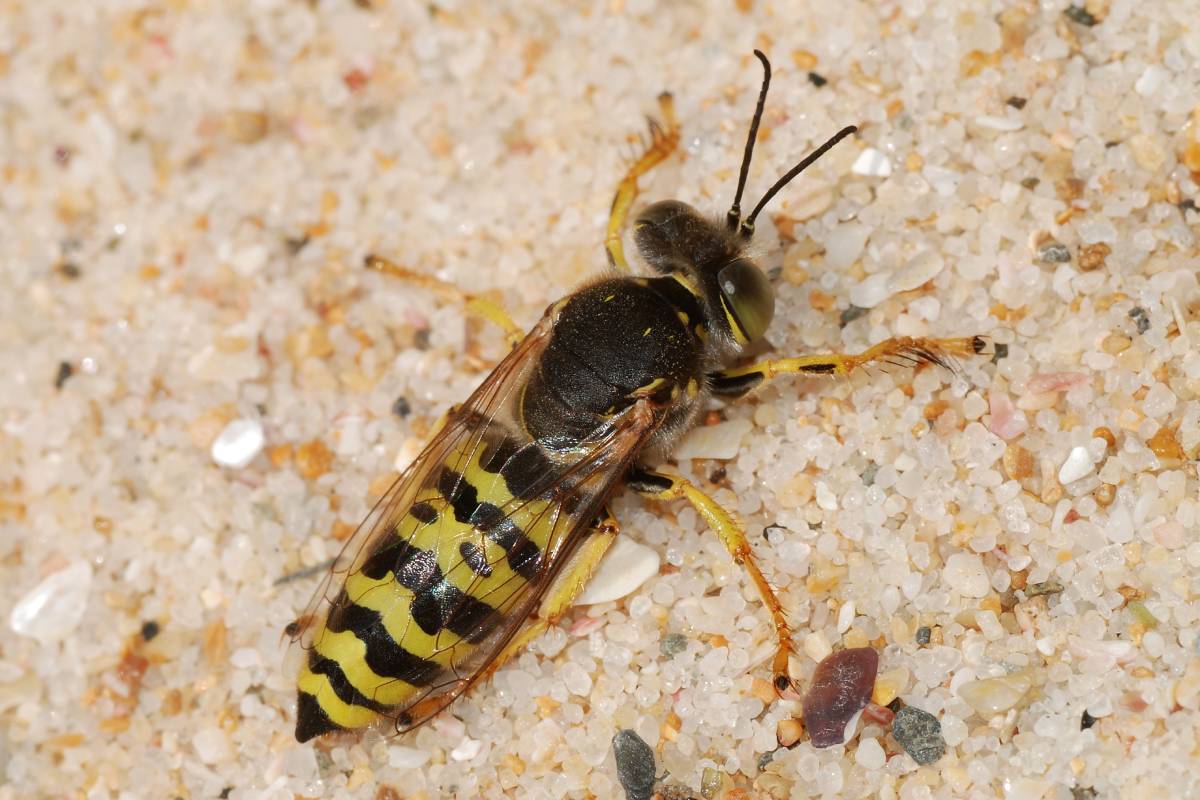
Photo by Alvesgaspar, CC BY-SA 4.0, via Wikimedia Commons
4. Sand Wasp (Bembix spp.)
If you have sandy soil in your garden, you might see these wasps hovering erratically near the ground during summer.
How to Identify: Sand wasps often have striking pale green or yellow bands and large, prominent eyes. They are famous for their “hovering” flight pattern, which people often mistake for aggression.
Nesting Habits: They are solitary nesters that dig individual burrows in sunny, sandy patches.
Safety Advice:
Low Risk. They hover near people to catch the flies that follow us, not to attack. They will only sting if you step on them or sit on their burrow.
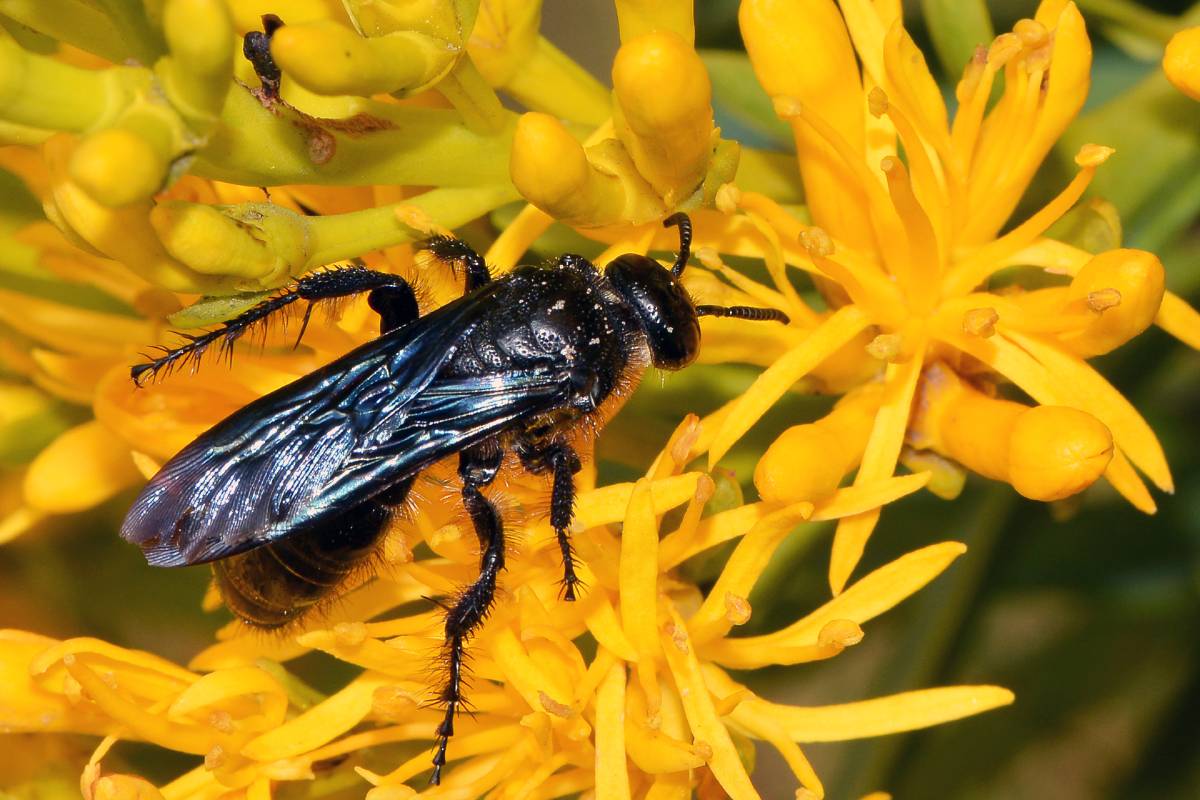
Photo by Jean and Fred from Perth, Australia, CC BY 2.0, via Wikimedia Commons
5. Blue Flower Wasp (Scolia soror)
These “gentle giants” are often mistaken for hornets because of their large, imposing size.
How to Identify: They have a glossy black body with a beautiful metallic blue sheen on their wings. You will mostly see them crawling over flowers in search of nectar.
Nesting Habits: They do not build social nests. Females burrow into the soil to find beetle larvae, which they paralyse to provide food for their young.
Safety Advice:
Very Low Risk. They are almost entirely disinterested in humans. As vital pollinators and beetle-population controllers, they are a sign of a healthy Australian garden ecosystem.
Wasp Sting First Aid: 3 Essential Steps
If you are stung by a wasp in Australia, follow these steps immediately:
- Wash the area with soap and water to prevent infection.
- Apply a cold pack for 15 minutes to reduce swelling and pain.
- Monitor for Anaphylaxis: Seek emergency medical help if you experience difficulty breathing, a swollen tongue, or a widespread rash.
Summary: Leave it or Remove it?
As a rule of thumb: if the nest is underground or inside a wall, it’s likely a European Wasp and needs professional removal. If it’s a hanging paper nest in a high-traffic area, it should be moved for safety. However, if the wasp is solitary (Mud Dauber or Flower Wasp), they are your garden’s best friends.